Pearls of witticism from 'Bo the Blogger: Kushibo's Korea blog... Kushibo-e Kibun...
Now with Less kimchi, more nunchi. Random thoughts and commentary (and indiscernibly opaque humor) about selected social, political, economic, and health-related issues of the day affecting "foreans," Koreans, Korea and East Asia, along with the US, especially Hawaii, Orange County and the rest of California, plus anything else that is deemed worthy of discussion. Forza Corea!
The top story (#1) is this delicious piece, an example where the news itself makes news. Some story in the Japan-based journal The Diplomat started with the revelation that American commandos were parachuting into North Korea to spy on the North's secretive facilities, rendering them not so secretive:
U.S. Special Forces have been parachuting into North Korea to spy on Pyongyang’s extensive network of underground military facilities. That surprising disclosure, by a top U.S. commando officer, is a reminder of America’s continuing involvement in the “cold war” on the Korean peninsula – and of North Korea’s extensive preparations for the conflict turning hot.
Well, that's got to be having the Nork defense ministry lighting up in pants-crapping terror. It turns out that it's not true or, at least, it has been emphatically denied. Which of course the US would have to do. Even if it were true. (The Diplomat offers an explanation of sorts, while Joshua at One Free Korea takes a close look at the claims and denials.)
And truthfully, I truly hope it is true. But even if it's not, there's value in the North Koreans thinking it's true (though I suspect they've always thought something like this is going on, since they themselves send their folks to the South).
Claiming key officer was misquoted, Washington denies report in Asia-Pacific affairs journal that US military commandos have been sent into North Korea to spy on underground facilities (NPR, WaPo, UPI, Yonhap, Joongang Daily)
US State Department says it is concerned about North Koreans' wellbeing in light of reports of drought in DPRK, but says food aid is off the table unless Pyongyang can demonstrate fair and transparent distribution (Yonhap, Korea Herald)
United Nations report says family of South Korean Oh Kilnam, who fled North Korea in 1986 after defecting to the DPRK a year earlier, is being forcibly detained (Joongang Daily, Chosun Ilbo, Donga Ilbo)
South Korea strongly condemns Syria over massacre of one hundred civilians, by artillery shelling and close-range shots, in village of Houla (Yonhap)
Samsung quickly launching Galaxy smartphone in Europe in order to beat iPhone to the punch (AP via WaPo)
Korean won rebounds from seven-month low as fears over Greece recede (Bloomberg)
South Korea's current account surplus shrinks from $2.97 billion in March to $1.78 billion in April (Yonhap)
Korean Air denies government antitrust watchdog claims that it colluded with Miat Mongolian Air on Incheon-Ulan Bator route (WSJ, Chosun Ilbo)
Seoul National University, KAIST, and POSTECH among the top ten universities in Asia in new ranking (Chosun Ilbo)
Raleigh residents celebrate defeat of same-sex marriage in North Carolina with first annual Straight Pride Parade (CNN)
We're talking about Kim Jong-un, of course, and how the bluster has continued unabated right through the Dear Leader's wake and the Prodigious Progeny's takeover and makeover. This is, of course, because the real people controlling things are people behind the scenes, not necessarily those sitting on the throne.
Anyway, North Korea has been turning up the heat by promising holy jihad against South Korea and the United States as the two allies prepare for annual military drills. And to that, the Christian Science Monitorasks whether we should be taking this seriously at all.
It's worth a read, but my own take sounds fairly close to the gist: This could all be empty rhetoric designed to whip up fear and pride in the masses and make sure they remember there's a bogeyman out there, just in case they get any big ideas about overthrowing the government to avoid starving to death, and all that, but the actual strikes on South Korean islands (namely Yŏnpyŏng-do) and the sinking of the ROK Navy vessel Ch'ŏnan give us pause that they might actually try a repeat of something like that in order to get us to take them seriously and to get people like me (and Don Kirk, etc.) to stop referring to their bluster as empty rhetoric.
If there really are competing factions within the Pyongyang regime, the chance of this happening is greater, because the last thing that the militarists want (note, I did not say military) is reform, appeasement, and a world where Truth Commissions remain a future possibility.
Over at Forbes, Doug Bandow, regurgitated the Korea-defend-yourself rant. A snippet:
However, Seoul has precious few responsibilities in return. ROK forces never have been stationed in America. There were never plans for the South to assist the U.S. if the latter was attacked by the Soviet Union. No South Korean ships patrolled the sea lanes and no South Korean aircraft guarded the sky.
In the early days there was little the ROK, an impoverished dictatorship, could do. Seoul could not protect itself, let alone anyone else. But then, Washington should not have maintained the fraud that the security tie was mutual.
The South since has joined the first tier of nations. It obviously can do more, much more. Nevertheless, the treaty remains a one-way relationship. The ROK occasionally has contributed to Washington’s foolish wars of choice, such as Vietnam and Afghanistan, in order to keep American defense subsidies flowing. But this is no bargain for the U.S., which is expected to protect Seoul from all comers.
As you can guess from my past posts, this article had me throwing things at my computer monitor. The nicest I can put it is that this article is so fraught with inaccuracies and lack of understanding, Forbes should be embarrassed for allowing it to be printed.
The assumptions that underpin Mr Bandow's ignorant rant — that South Korea does nothing for its defense, pays nothing for its defense, and does nothing to help — are all grossly inaccurate. I would excuse him for writing as if it's still 2005, but he gets even that wrong (he's also wrong about the Cold War being over, at least in Northeast Asia).
Even during the leftist Roh Moohyun administration, South Korea has consistently spent about 2.5 percent or more of its GDP on its military. That's not as much as the US, of course, but considerably higher than most of its allies.
This is almost all geared toward defense against North Korean attack, but increasingly more is spent on helping the US patrol against international piracy (as does neighboring Japan that also enjoys US defense commitments), as well as the US-led operations in Afghanistan and in Iraq, where South Korea had the third largest contingent of military personnel after the US and the UK.
More importantly, hundreds of thousands of South Koreans fought alongside their American counterparts during the Vietnam War. At any given time there were 50,000 ROK troops there, and the number of dead is officially over 5000. That's from a country one-sixth the population of the US. It is irrelevant that Mr Bandow thinks these wars were "foolish," and that does nothing to diminish South Korean sacrifices.
Today, every South Korean male is required to serve in the military or do some appropriate government service. The typical commitment is over two years, in the prime of their youth. Again, this is geared almost entirely toward defense against North Korea, and it represents tremendous costs to the ROK government, its economy, and even its demographics (as it leads to delayed marriage and thus lower overall fertility in a country that is disastrously below population replacement levels).
So Mr Bandow is wrong on all those counts. Moreover, he utterly misses the point of the value of the US military presence in Northeast Asia. The deterrent presented by the US military in Korea, Japan, and Guam has kept the region free of major conflict for nearly six decades. Contrast that with the previous six decades, which saw four major wars fought on or over Korea.
Deterrence costs pennies to the dollars compared to what would likely result if the US vacated (and which the US would almost certainly get sucked into anyway). Japan, South Korea, Taiwan, and other countries in the region may not always see eye to eye with Washington, but the Pax Americana has helped foster democracy and open markets that both are highly beneficial to the United States.
And that discussion doesn't even get into the inherent reliance that South Korea has on the United States because it agreed not to develop nukes that would better insure its territorial security.
Not to mention the whole idea of allied deterrence is that North Korea might think it can get away with an invasion of South Korea if it punches really, really hard in the beginning (what they did in 1950), but they would be highly unlikely to do it if they knew South Korea's powerful ally would come to bear on them. Critics call it a "tripwire," but any thinking person would just realize it makes good sense.
Next time Forbes should leave the Northeast Asia analysis to Northeast Asia analysts and not ideological pundits paid by the pixel.
This evening I will go off to Magic Island to watch Honolulu's unique lantern floating ceremony that has become a Memorial Day tradition here on Oahu, where it's still Monday despite the Tuesday dateline.
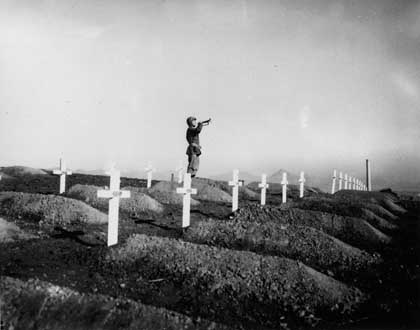
In the meantime, I leave you with a couple past Memorial Day posts to honor the brave men and women who have given up their lives for freedom and peace, particularly those whose sacrifice helped pave the way for a brighter future for South Korea.
As I state every year, if you have time this Memorial Day, go and thank a vet — of any war — and ask them a question or two about their experiences. And next week, when it's no longer Memorial Day, do the same thing. And the following week, too, if you can.
The US military is also looking to consolidate dozens of bases around South Korea into two hubs -- Pyeongtaek, 70 kilometers (45 miles) south of Seoul, and Daegu, 300 kilometers (180 miles) southeast of the capital.
The move would allow US forces to leave their huge Yongsan base in Seoul, which was set up for the 1950-53 Korean War but now lies in the heart of the developed and densely populated city, leading to frictions with residents.
But the senators called for a halt, saying there was not enough clarity on who would pick up rising costs at Pyeongtaek where the US military wants to start shifting troops next year.
The senators also questioned the Pentagon's plan to allow more of the 28,500 US troops based in South Korea to bring families.
"There is an inherent contradiction in planning to increase the number of US military family members in South Korea when there is the real potential that a destabilizing security situation in North Korea could unfold rapidly and unpredictably," Webb said.
Honestly, this sounds a bit like some senators are shooting their mouth off because they have to say something.
If one values a US military presence in South Korea (and I definitely am one of them) then they have to go somewhere. But keeping them smack in the middle of the capital is no longer tenable. The move to Pyongtaek has been in motion and it will probably end up costing more in political capital and actual money if it were halted now.
As for Japan, I'm not as certain of the situation there, but I do think it is important for stability in the region for US Forces Japan to maintain a strong presence. They do not need to all be on Okinawa, but moving them all to Guam, a tiny island whose inhabitants are also chafing from the US military dominating much of the territory, is almost a nonstarter.
How about this for a proposal? Much of Japan is losing population, with many parts of the countryside emptying out as people move to the cities for economic opportunities or the elderly die off. Maybe it would be a boon to one or more of these areas if the bases formerly on Okinawa moved nearby. The land is there and there might be some folks who want jobs close to home.
Of course, my plan might be just as full of crap as Senator Webb's.
While conducting joint naval exercises in the Yellow Sea not far from where North Korea torpedoed the Ch'ŏnan and then shelled a town on a South Korean island, a South Korean army unit on the mainland accidentally fired a shell, which (thankfully) landed on the ROK's side of the DMZ.
The South Korean military accidentally fired a shell during a land-based military exercise Sunday afternoon, a South Korean military spokesman told CNN.
The country's defense ministry declined to provide details about the land exercise.
The United States and South Korea also began naval drills in the Yellow Sea Sunday, but a U.S. military spokesman has said no live firing will take place during those exercises.
The shell was fired by a unit located near Munsan, South Korea, and landed on the southern side of the military demarcation line, the South Korean officer said.
"The South notified North Korea that this was accidental firing through a statement issued by the chief delegate of inter-Korean general level talks," the officer said. He added, "the military is looking into the cause of the accident."
Yonhap also has the story. I say we "accidentally" fire loads more shells. Then if we ever do need to actually shell North Korea, they'll be caught off guard. After all, with their repeated shelling of the waters on either side of the NLL over the past year, that's what North Korea has been doing.
They say bad news comes in threes, and it may be true for bad videos. (I would warn you that some of this stuff may be NSFW, but the fact is, I have no idea if this is okay where you work. Maybe your boss likes this kind of thing and you having it on your monitor will make you more popular and more likely to get that promotion. So in lieu of "NSFW," I will offer the Kushibo Warning: One of the links contains video of a pop star practically falling out of her top while chasing a muppet, but it's up to you to decide if that's something you are able to view at work. I ain't your mommy or your nanny.)
Okay. Now that Legal is happy, let's begin [kushibo turns on echo voice effect] The Week in Video!
Oh, my. Apparently, as best as objective sources could piece together JJ, the Otis of Itaewon, accidentally hit Fake GI with a pool stick and Fake GI got irate and it went outside where JJ refused to apologize (he's an old guy, and this is Korea, where things are still Confucianist to a high degree) and that just made Fake GI even more irate, to the point that he punched the decrepit old man in the head a couple times.
He then followed this with a tirade about how, "I fought in Iraq for six years to put up with your bullshit... I killed more men than you ever met." And while that looks bad for the GI community, a lot of people were quick to point out this guy was not a GI. So what gives about some jackass running around punching people and claiming some Iraq War bravado? A pre-emptive and impromptu PTSD defense just in case the cops do come and arrest your ass?
And they did. But here's the thing, JJ didn't press charges. He pulled a Reginald Denny: he got his apology and that was it. And yeah, as mucked up as that may be, that's the way it works in Korea (and yes, it even works for foreigners).
Even if he should have apologized, and granting — judged from everything I’ve read or heard — that the old guy seems to be rather well-known in Itaewon, there’s no excuse for what I saw on that video. And to be frank, I live in Itaewon, and don’t want someone like that roaming the streets.
Exactly. I don't care if the old guy didn't press charges against this punk: This hot head is a danger to the community and he ought to have to pay a fine if not get jail time. Heck, I wouldn't shed a tear if the guy got deported. The guy needs something to teach him a lesson; he can't just get away with it.
In fact, this really underscores a problem with crime and punishment in Korea today: While the effort by the cops to get wrongdoers to apologize and make amends (often financially) to the wronged party, this also serves to allow violent offenders to get off scot-free. It may work fine with traffic accidents, but apply this to child molestation, sexual assault, physical assault such as this, and you could have a serial offender basically never seeing the inside of a courtroom or jail where he (or she) belongs.
And what's the deal with everyone standing around watching this happen? (Well, not everyone.)
And on to our next vid, there's the rude girl who "yelled" in panmal to an elderly woman after being scolded by her a few too many times, only to have the nana go Rambo on her ass in a crowded subway.
If you have trouble viewing that, go to Roboseyo's for the YouTube version, which has the audio off from the video, making it all the more bewildering.
Now this halmŏni opening a can of whup-ass has opened a can of worms as well. In still-Confucian society, just how Confucian are we? Can the elderly get away with anything simply because of their age-based position? What is the appropriate response for the egregious offense of speaking to an elderly person in panmal? (The Korean thinks a slap to the face is not inappropriate, and I'm not so sure I disagree, though what we see in the video is clearly crossing the line.)
[As a side note, I think it's interesting that Darth Babaganoosh has actually encountered this halmŏni, to the point that she may be something of a fixture. Kinda cool that even in a city of 10 million souls, it's "small town" enough that we can have our resident Otis the Drunk and That Old Bat on the Subway.]
And what's the deal with everyone standing around watching this happen? (Well, not everyone.)
This video went viral and everyone was talking about it, but just when you thought there would be a national discussion on these very topics, along comes Evil English Teacher of the Month. That's right, water cooler talkcha•p'an•gi coffee machine discussion about the subway struggle may have been displaced by news of the English teacher — an English instructor for preschoolers — who was apparently taping himself having sex with various Korean women he went out with, which he then tried to sell as porn. Or something like that.
Oh, my. Did I mention he was Black? Well, it's not important to me, because any English teacher doing something like that would bring a lot of unwanted attention on the English-teaching community, but some of the Korean media did mention his race (흑퀸시). Well, I guess they sorta had to since "Black" was in his porn name, Quincy Black. Kushibo's porn name, by the way, is Panther Artesia.
I wait in anticipation for Metropolitician to brush this off as merely a young man just making home videos of his time in Korea.
All right, time to finish this on a less oh-fu¢k-we're-s¢rewed note, so the last video is Katy Perry's famous appearancenon-appearance on Sesame Street.
Oh, my. I'll bet the producers of Sesame Street were shocked... shocked!... that someone as wholesome as Katy Perry, a pastor's daughter and former gospel singer, would attract so much controversy.
UPDATE:
In light of the Quincy Black story, this is as good a time as any to recap for readers how to label their homemade videos, and remind them that the only safe way to avoid your nekkid body ending up online is by having sex just with the Amish.
With Typhoon Kompasu having done quite a lot of damage to the capital Seoul and much of the rest of the peninsula, the military commands for USFK and the ROK forces decided to postpone the anti-submarine exercises. After finding that a DPRK submersible may be responsible for the sinking of the Ch'onan, such "games" (is that the right word?) are important, both in terms of training and sending a message.
The exercises were scheduled to begin Sunday and run through Thursday, the forces said in a statement. Tropical Storm Malou is forecast to arrive in the region Monday.
Military officials said the exercise could have gone ahead despite the weather, but safety concerns prompted the postponement.
"Although the alliance is capable of operating in all weather conditions, this decision was made in the interest of safety for the participants," the U.S. military said in its statement. "Both high winds and heavy seas would have directly impacted the exercise area and the training objectives."
Whew. I for one am glad they reassured us that "the alliance is capable of operating in all weather conditions." If we couldn't defend the country in times of, say, a downpour or a blizzard or icy road conditions, that would really, really suck.
And I'll be honest, in my bleary-eyed state this morning, I had misread that they were cancelling submarine exercises, and I was all set to snarkily wonder if we had a fleet of submarines that couldn't operate in the wet. I'd hope that about North Korea's navy, but not ours.
But like I said, that was a misread, and it's only our ships and planes that aren't waterproof.
Typhoon Kompasu struck Seoul with heavy winds that
uprooted trees and wiped people's faces off their heads.
From the "bring 'em home" crowd, we often hear that South Korea is now such a rich country that its defense should be left to itself (as if South Korea is unlike the rest of the world, where strong military alliances are not the stuff of effective deterrence). South Koreans' mandatory military service of about two years and the sizable chunk of GDP spent on defense are pooh-poohed in order to make this point.
But the sinking of the Chonan has bared for all to see that South Korea is still vulnerable to an enemy willing to nip at its heels or whatever body part it sees as vulnerable, and that means that more help from the US may be needed.
That's the message of this article in the New York Times, which suggests that South Korea's vulnerability to these North Korean attacks may not be due to an unwillingness to expend labor and capital to keep the military strong, but instead occurred despite actions intended to maintain a formidable military:
Surprised by how easily a South Korean warship was sunk by what an international investigation concluded was a North Korean torpedo fired from a midget submarine, senior American officials say they are planning a long-term program to plug major gaps in the South’s naval defenses.
They said the sinking revealed that years of spending and training had still left the country vulnerable to surprise attack.
The discovery of the weaknesses in South Korea caught officials in both countries off guard. As South Korea has rocketed into the ranks of the world’s top economies, it has invested billions of dollars to bolster its defenses and to help refine one of the oldest war plans in the Pentagon’s library: a joint strategy with the United States to repel and defeat a North Korean invasion.
But the shallow waters where the attack occurred are patrolled only by South Korea’s navy, and South Korean officials confirmed in interviews that the sinking of the warship, the Cheonan, which killed 46 sailors, revealed a gap that the American military must help address.
The United States — pledged to defend its ally but stretched thin by the wars in Afghanistan and Iraq — would be drawn into any conflict. But it has been able to reduce its forces on the Korean Peninsula by relying on South Korea’s increased military spending. Senior Pentagon officials stress that firepower sent to the region by warplanes and warships would more than compensate for the drop in American troop levels there in the event of war.
But the attack was evidence, the officials say, of how North Korea has compensated for the fact that it is so bankrupt that it can no longer train its troops or buy the technology needed to fight a conventional war. So it has instead invested heavily in stealthy, hard-to-detect technologies that can inflict significant damage, even if it could not win a sustained conflict.
I am a firm believer in the Pax Americana, convinced that the US's unique role in Northeast Asia remains a necessary element for the peace, prosperity, and democratic values that have taken hold in this region. So when "bring 'em home" advocates talk about South Korea as a defense freeloader, I point out the statistics and I also suggest that rather than pulling US forces out of Korea, the better choice would be to have South Korea play a better role assisting the US military in places such as pirate-infested waters or Afghanistan and other hot spots. But right now I'm beginning to wonder myself if even that is a tad premature.
At The New Ledger and his own site, Joshua Stanton of One Free Korea makes a case for the departure from South Korea of the US Army (note: not the entire US military, which would still have Air Force and Navy installations in the ROK).
While I consider Joshua to be a very astute observer and commenter on North Korea whose site is among my most favorite ever, I think he misses the mark on this one, largely by use of "old news" that has long since changed. This is the comment I left:
If Mr Stanton's conclusion is that we withdraw our army units from South Korea, while keeping our air force and naval bases, I think that could be a warning to the current ROK government that they need to spend more money to modernize their own military, consider keeping mandatory military service at two years instead of dropping it eventually to eighteen months, expand ROK naval assistance in pirate-infested waters of Africa and Southeast Asia, and more substantially help out in other places. And if President Lee's government balks at this, we'd be within reason to make good on the threat of withdrawing the army units.
But the air force and navy should remain, not only to make it clear to North Korea that any invasion would be met with the full force of two militaries, but also to keep China hemmed in throughout the region, something of value not just to South Korea, but to America and all its other allies in the region. The Pax Americana has been the most successful source of stability in the region for centuries, and its very effectiveness should not be seen as a reason to dismantle it.
So if the distinction between removing the US Army and removing the US military is made, my only real quibble with this article is the copious use of examples from four or five years ago or earlier, a lifetime of change in Korean time and back when a highly unpopular, blindly North Korea-sympathetic administration was in Seoul's Blue House. So many things are so different from then, including an increasing commitment to aid America's efforts on the high seas and help rebuild Afghanistan (a large medical center and job training facility opened this week near Bagram), that the article is somewhat outdated.
Of course, things can change again, but for now the fifth-columnist chinboista forces that infect public sentiment are largely at bay, but even when they are raging or manipulating, the loud protestors on the vocal fringe do not necessarily represent the public at large. Walking off in a huff because the agenda-driven opposition says bad things about us is not a good way to run military or foreign policy.
Of course, anyone who reads my site regularly has probably already read my own views on the highly successful Pax Americana, so my take on this perennially floated proposal should be familiar and unsurprising.
Commenters are discussing the same thing at The Marmot's Hole. Predictably, some of the very people whose disdain for Korea is ever apparent are the same ones saying Korea should fend for itself (not that this is Joshua's argument). Regarding commenter David Barch's point...
I don’t hear anyone offering up a thoughtful rebuke to the idea that rich, developed countries like Korea should provide for their own defense.
... the rebuke might be that South Korea is providing for its own defense. In fact, 2.7% of South Korea's GDP is spent on military expenditures, not as much as the two war-fighting US at 4.06%, but considerably more than most American allies (Japan at 0.8%, Ireland and the Philippines each at 0.9%, New Zealand at 1.0%, Canada at 1.1%, Spain at 1.2%, Germany at 1.5%, Poland at 1.71%, Italy at 1.8%, Taiwan at 2.2%, the UK and Australia each at 2.4%, and France at 2.6%, among others).
And then there is the average of two years of military service most South Korean men must go through, which comes with considerable opportunity costs vis-à-vis economic growth and demographics. The notion that South Korea is not pulling its own weight is pure fantasy pulled out of the arses of people who are somehow able to maneuver that notion past the stick lodged up that same arse that they have about Korea.
That is not to say South Korea can't be a better partner that does more outside the peninsula or that allows the US to use ROK-located bases for its own missions outside the peninsula, but the guaranteed two-against-one if anyone messes with South Korea is what keeps it safe. Alliances are built on that principle, and I don't understand why people whose own negative impressions of Korea color their thinking on everything from Hyundai to Bagram so conveniently forget that when it comes to the ROK.
I'm debating whether or not to head down to Magic Island, a beach park near Ala Moana Shopping Center in central Honolulu (and the place I most commonly go kayaking), for this year's Lantern Floating.
It happens every year on Memorial Day, which is an appropriate day to give prayers for those who have passed and for a peaceful future for the remaining. Like Waikiki's annual Halloween Parade, Honolulu's rough equivalent of Mardi Gras but with a little bit less flashing of nipples, this is one of the must-go events that they say you should experience at least once while living on Oahu.
I'm not entirely sure how I feel about what looks like it could be an environmental catastrophe in the making. Magic Island does have a reef that not only blocks the waves but also tends to trap things (and keep out sharks), so maybe they're able to grab them all up before they kill a sea turtle or some hapless migratory bird.
Having to deal with the crowds will be part of my debate. Sometimes I'm in the mood for being part of an energetic group of people, but sometimes I just want to run away as fast as I can.
My ex was always bugging me to take her to Myŏngdong (left), which was always crowded and never had parking (and is obnoxiously loud when you have adjacent stores with their competing boom boxes). If I wanted to be part of a sea of people noisily causing environmental damage like this, I'd have stayed in Seoul.
My primary association with the US military is here in Korea, where the country's ties with the US military relationship are a constant reminder, particularly for those of us who live and/or work in central Seoul's Yongsan-gu. One of my biological grandfathers was a career soldier, having voluntarily enlisted during World War II, but I never met him and he was almost completely out of the lives of his children, so I know little about what he did. Other relatives, uncles and cousins, have been or are in the US military, serving in places as far apart as Korea, Japan, Kuwait, Afghanistan, Iraq, Germany, Italy, and South Dakota.
From very young I have been aware of how the US military intervention in Korea has changed the course of Korea's destiny. Books like "The Korean War" by British journalist Max Hastings (coincidentally, mentioned by The Marmot recently) elaborated on and underscored the sacrifices made by the Americans, Brits, and others. That book is a well-needed antidote to counter the Pyongyang-sympathetic tripe produced by "historians" such as Bruce Cumings.
I always thought that even if one disagreed with some of the ways in which the US military was used, Korea was one place where the post-World War II efforts of the US military bore fruit: while Korea under Rhee was no bastion of freedom, the ROK was preserved so that it could later flourish, first economically, and then democratically. Koreans of today owe their comfortable existence, at least in part, to the tens of thousands of American soldiers and others who died fighting for this land they probably had never heard of before June 25, 1950.
To them, I say "Thank you."
Memorial Day is a day on which we honor their sacrifices, but it shouldn't be the only day. I have tried to show my appreciation in other ways. I have volunteered or worked at several USFK-associated organizations as a way of doing my part. I have made no secret of my belief that a US military presence on the Korean Peninsula is crucial for maintaining peace, stability, and prosperity in the region, which is good not only for America's allies in Northeast Asia, but for American values (as well as its valued commerce).
In that sense, my "help" is something I see as putting my money where my mouth is, so to speak. Perhaps some day I will do more. A few years from now, perhaps I will be in uniform working in one of the branches of the armed forces in the medical field. It is an idea that I've toyed with, but in the back of my mind, I really wonder if I'm brave enough even to play that kind of military role in which I'm not likely to be shot at.
At any rate, I have always admired those who have served. I have nothing but respect for what Tom Brokaw calls "The Greatest Generation." I feel tremendous gratitude to those who served in Korea and elsewhere during the Cold War, holding back a threat that was real (and which we are still paying for).
Yes, there have been mistakes and missteps made by Americans and their allies, some of them serious, but I believe the world would be a much darker place without those we honor on Memorial Day.
Nomad posted a couple stories about a group of USFK personnel in Uijongbu who robbed a taxi driver and then locked him in the trunk of his car. Last week they admitted what they had done, and we're waiting to see how the case will be handled.
A commenter named justpassingthru through claims that this same group of people has beaten down a bar owner and his wife, but they were still running around. Nomad himself is incredulous about the claim:
So you're saying that's correct? The same guys previously beat up a bar owner and his wife? I'm having a hard time believing they did that and were still walking around free.
If it is true (and I will retract some of this if it turns out it isn't), then I have something to say about this. [Before I begin, I want to make clear that I'm saying this from a personally held point-of-view that USFK is mostly well-behaved and that the chinbo "progressives" who want to push USFK off the peninsula to remove what they believe is the primary obstacle to peaceful unification seek to blow any incident out of proportion.]
It is this kind of thing that, when reported, feeds the common Korean public perception (well, mostly misperception as far as I'm aware) that too many USFK personnel have for too long run amok without fear of real punishment by a military organization that lets things slide when Korean nationals are victims of such crime by USFK personnel.*
This, plus the taxi jumpers and the alleged stabber in Shinchon who managed to make a spectacle on camera (GI Korea suggests the half-naked guy [seenabove in what GI Korea describes as a staged photo] with the yakuza-esque tattoos who was willingly breaking regulations against being in an off-limits area "was probably a good kid just out having a good time with his friends"), are a composite image that, sadly, can eclipse the many good deeds of thousands of law-abiding, hard-working USFK personnel. *A proper refutation of this perception would address how USFK personnel crime is taken seriously by USFK, not point out, correctly or not, that the Korean judicial system does not take seriously crimes committed by Korean nationals against USFK personnel.
[Note: This post was originally intended to be a comment at Marmot's Hole about Korean being a welfare queen, especially when Marmot called into question the need for the Pax Americana to continue. I did post it at Marmot's, but decided to put it up on my own blog here, with some modifications.]
The Marmot wrote: As for Pax Americana, yes, it did keep everyone reasonably well behaved in the region during the Cold War, but I don't see why the US need play the same role now.
This is one of the problems of the Pax America: it's very success leads people to believe it's not needed. It still does keep everyone reasonably well-behaved. And too little has changed to realistically expect that that good behavior would continue of the U.S. were not playing sheriff.
I know it may sound unpopular to tout the United States' role as the world's policeman, but the fact is that there is no one else to play that utterly necessary role. To paraphrase actor Troy McClure (a character in The Simpsons voiced by the late Phil Hartman) when he was told he'd gotten the part of The Human in a theatrical version of "Planet of the Apes": It's the part we were born to play, baby!
No other country has the combination of the power, the willingness to use that power where appropriate, PLUS the commitment to democracy, economic growth, and human rights that the United States has. No one.
A very distant second would be the United Nations, which is too mired in its own bureaucracy to play anything beyond being a peacekeeper where peace has already been established. It serves no deterrent threat in the way that the United States does. The US-led war in Iraq may be unpopular around the world, but the fact remains that there is no government that fears the United States that is not doing serious wrong to their own people.
Were the US to give up that role, there would be no one to take it up, and we would see with the absence of effective alliances why a good alliance keeps the peace. China would be a threat to Taiwan and to all of Korea, and perhaps Japan. Japan would see China as a threat, especially if it swallowed up Taiwan (which is a stone's throw from Okinawa) or Korea, and they would engage in a massive military build-up which would in turn give China further reason to build up its military. With its eastern neighbors engaging in an arms race, who knows how Russia will react around its territories.
The result would be a very expensive and very big powder keg. Japan alone has two major territorial disputes not counting the least likely to blow up, Tokto/Takeshima: The "Northern Territories" of Etorofu, Kunashiri, and Shikotan, known as the "Southern Kuril Islands" by the Russians who occupy them; and Diaoyutai/Senkaku-shoto, uninhabited islands with great hydrocarbon potential that are also claimed by China and Taiwan, and where Japan has unilaerally declared an economic zone.
For its part, China has numerous territorial disputes besides Diaoyutai/Senkaku-shoto. There are still issues to be squared away with India and Pakistan, where China is involved with the Kashmir question, said to be the world's largest and most militarized territorial dispute. An area where China may be more likely to get involved in actual shooting might be the Spratly Islands, over which China claims sovereignty, as do Malaysia, the Philippines, Taiwan, and Vietnam. China also occupies some of the Paracel Islands that are also claimed by Vietnam and Taiwan. There are even issues with North Korea (islands in the Amnok/Yalu River and in the Tuman/Tumen River, plus an indefinite border around Mt. Paektusan) which could become pretextual flashpoints in some future land grab.
In the early 1990s, the Philippine Senate booted out the US military in a fit of nationalism; shortly thereafter, the People's Republic began putting up military structures in the Spratly Islands to bolster their claim. I don't think the timing is a coincidence but a portent.
It's not like the Big Red Dog is barking at the door.
The biggest red dog has been put to sleep. The other one has been barking, but not so much because we've been feeding it milk-bonz and we're carrying around a big stick.
China is not threatening two of America's two largest trading partners, unless you're referring to Taiwan as one of them.
China is not overtly threatening South Korea or Japan because the United States is there. And China is threatening Taiwan on a regular basis. China waits patiently for opportunities; if none are there, it does nothing.
China is a mid-ranked regional power at best, and Japan and South Korea are more than capable of defending themselves against potential Chinese aggression.
If China were to quickly and decisively take over the Diaoyu-tai/Senkaku-shoto, or to rapidly move in to a collapsing North Korea in order to "restore order," what would a lone Japan, Taiwan, or South Korea be able to do to stop this?
Heck, with China surrounded by Korea, Japan, India, Russia and Vietnam, I fail to see why the U.S. need pay the costs of "keeping things safe."
Taiwan and South Korea spend about 2.5% of their GDP for their military. South Korean males are required to spend on average over two years of their young lives in military service; Taiwanese spend 18 months. In other words, they are paying part, not all of the costs. These countries are paying what they can, and they're giving up a lot in terms of manpower to do it. There is no free ride; these are not welfare queens.
Japan's case is special, because of the pacifist constitution that the United States put in place (and the result has been very good for peace in the region). There is a 1% cap, but in Japan's case, that's a lot of money. Again, Japan is not getting a free ride, especially considering the usage of valuable land that Japan provides the U.S. military bases. Tokyo is paying its own way in ways that it can.
Seems to me a waste of resources and wrongly placed subsidies.
The US military deterrent costs pennies compared to what could easily happen if the United States were not playing sheriff in this neck of the woods. Besides the blow to democracy and human rights that would likely occur if a war were to break out between China and Japan over the Diaoyu-tai/Senkaku/shoto, for example, or if China were to establish control over North Korea (or all of Korea) or Mongolia. Let's not forget, the Chinese sent in troops to bolster its satellite state just fifty-five years ago; they do consider such things within their purview.
The success of the Pax Americana can be summed up very easily. In the sixty-year period ending with the Korean War, there were FOUR major wars involving the Korean Peninsula: the Sino-Japanese War of 1894-95, in which Japan wrested control of Korea from China, taking over Taiwan outright in the process; the Russo-Japanese War of 1904-05, in which Japan re-asserted its claim over Korea against Russia and moved to take over part of China; the Second Sino-Japanese War, beginning in 1937, in which Korea was used as a base from which to launch and sustain a strong war against China and its other neighbors; and the Korean War, in which the Russians and the Chinese both sought to help a vicious communist Korean government wipe a capitalist Korea off the map.
This is not just about Korea: Japan was the instigator in three of those wars; including the bloodiest; China was involved in three of them; and Russia was involved in two.
Since the end of the Korean War, when the US-ROK alliance, the US-Japan alliance, and the US-Taiwan alliance were all firmly established and in place, there have been ZERO major conflicts. The only variable has been the strong U.S. presence.
The sheriff's in town, so behave.
So is this a big waste of money? Not considering what the recent historical record shows us that the future holds without the U.S. playing sheriff.
By way of analogy, think of the dikes and levees that were supposed to prevent New Orleans and southern Louisiana from being submerged in the event of a serious hurricane. The Feds and the State (apparently under both Republican and Democratic leadership) decided that it would be too costly to do anything beyond a Category-3 hurricane. And after all, what is the likelihood of something more powerful than that hitting New Orleans? Not enough to justify the extra billions of dollars it would have taken.
Well, New Orleans gets hit by category-4 hurricane that had just been downgraded from a cateogry-5. What happens the ensuing death and destruction was far, far, far greater than what was saved by not preparing for it.
A war involving the countries that now benefit from the Pax Americana would be a major blow to the US economy. China, Japan, South Korea, and Taiwan make up 40% of the U.S.'s top trading partners. There would be untold death and destruction, probably hurting those who share the democratic values of the United States. And these wars have a way of eventually pulling the United States in anyway, so our effort to "save our boys" by getting out of the way would probably be for naught anyway.
With Hurricane Katrina, defense against foreign terrorists at home during 9/11, defense against domestic terrorists in Oklahoma City, etc., we can see that there are so many cases where the we (American citizens) were inadequately prepared for a threat we either underestimated or did not see. But here in East Asia, we are actually vigilant and ready. Why dismantle what has been and continues to be a genuine success story?
Of course, the lack of multilateral security systems in the region is somewhat distressing, but then again, when Uncle Sam is handing out bilateral defense guarantees, there's really no reason to build rational security regimes with your neighbors.
Somewhat distressing? It's very distressing. The United States can and should use its role to bolster good triangular relations with its allies. That might involve getting Roh to be more like Kim Daejung (who said that Korea and Japan's future relations should not be determined by historical grievances) and getting Koizumi to stop flouting the sensitivities of countries against which Japan onced aggressed.
And to be fair, the "sheriff mentality" can be applied both ways. South Korean personnel have been "deputized" for duty in other parts of the world, especially in Vietnam but also recently in East Timor, Afghanistan, and Iraq. Japanese personnel as well. This is something that should continue (in Japan's case, carefully so, within the framework of the pacifist constitution), maybe even increased.
That would be a better solution than bemoaning having to play sheriff because no one else can. Embrace being the peacemaker and peacekeeper; it is the legacy for which future history books will praise the nation. Plus it's a lot cheaper than the alternative.

 United Nations report says family of South Korean Oh Kilnam, who fled North Korea in 1986 after defecting to the DPRK a year earlier, is being forcibly detained (Joongang Daily, Chosun Ilbo, Donga Ilbo)